.jpg)


.jpg)


VANISHING TREES
Debora Hirsch
Texts by Lucas Merethikian
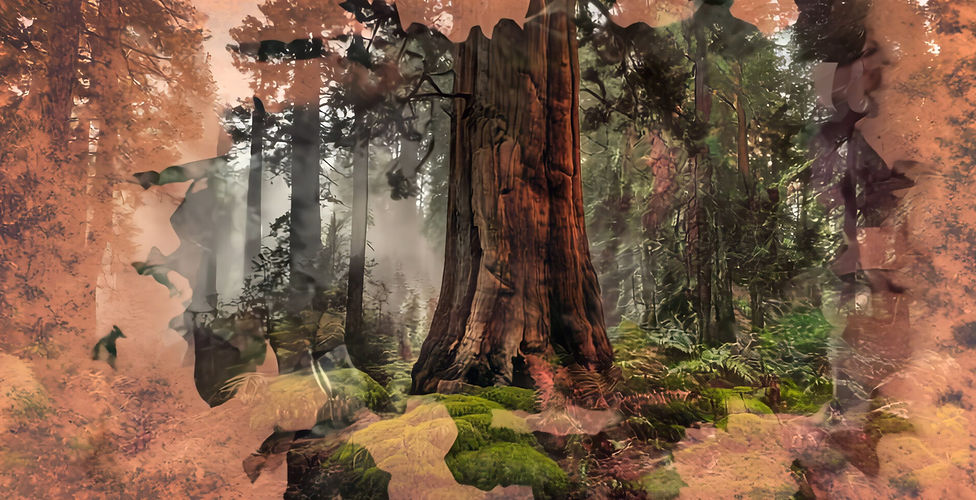
Vanishing Trees, situated within the field of Plant Humanities, approaches trees as historical, biological, and cultural entities rather than as passive elements of the landscape. Each tree speaks in the first person, while the video adopts a visually non-human perspective.
Developed through archival research, botanical study, and sustained visual inquiry, the project examines botany, ecosystems, extraction, migration, memory, and the thresholds of extinction at which the selected species now stand. Each tree is understood as a node within a relational field encompassing soil chemistry, fungal networks, pollinator itineraries, climatic shifts, and the long history of human relationships with the vegetal world.
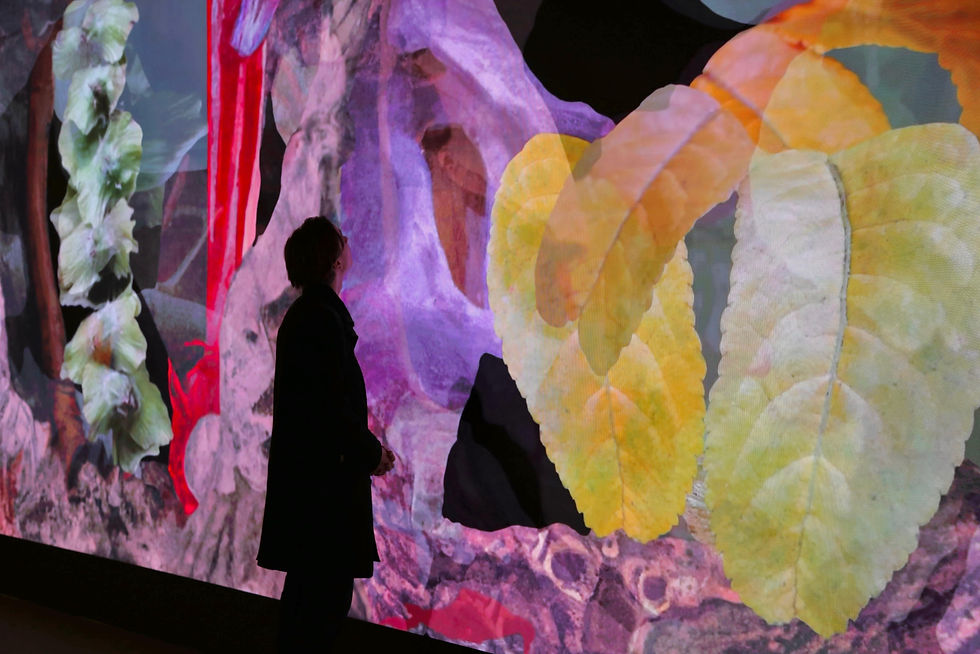
The trees speak in the first person. The visual sequence abandons the conventional human gaze and relocates perception within the surrounding ecosystem: among neighboring plants, animals moving through the canopy, fungi circulating nutrients and signals, pollinators whose labor is both intimate and systemic, and the tree itself as a sensing, responsive organism.
Artificial intelligence, datasets, 3D animation, digital painting, texts by Lucas Mertehikian, and post-production enable the construction of perspectives that are slightly speculative yet firmly grounded in scientific research. These perspectives acknowledge the limits of human perception and representation. Vanishing Trees considers extinction not simply as the disappearance of an isolated organism, but as the collapse of an entire relational world. It asks how art might render these threatened lives and ecosystems perceptible within contemporary visual culture.
The works on paper constitute a parallel and complementary topic of the project. They take as their starting point species that appear in the installations or are being considered for future chapters. Unlike the moving-image works, the drawings allow disparate biological realities to occupy the same pictorial field without hierarchy or chronological sequence. Microscopic structures appear beside canopy architectures; botanical details from one continent intersect with imagined organic formations from another; temporalities that could never coexist within a single ecology are allowed to meet on the page.
This deliberate heterogeneity gives form to the limits of human knowledge and perception, recognizing that our ways of looking capture only a fraction of the structures, processes, and relationships through which living systems exist and interact. The drawing becomes a space in which the incomplete, the speculative, and the scientifically grounded remain in productive tension.
In this sense, Vanishing Trees continues a line of inquiry that approaches the tree as more than an object or resource: it is a historical actor, a sensing biological presence, and a cultural archive. The work does not propose consolation or restoration as easy solutions. Instead, it offers a practiced attention to what is still here, what is already disappearing, and the dense, unfinished relationships that bind them.